
- Licensed in SC and NC. Rock Hill electricians since 2008.
- Mon - Fri: 8:00 am - 5:00 pm
- Rock Hill, South Carolina
- Sales@jeelectricofsc.com
Signs Your Home Needs an Electrical Panel Upgrade
Mon to Fri, 8 am to 5 pm. Estimate before work starts.
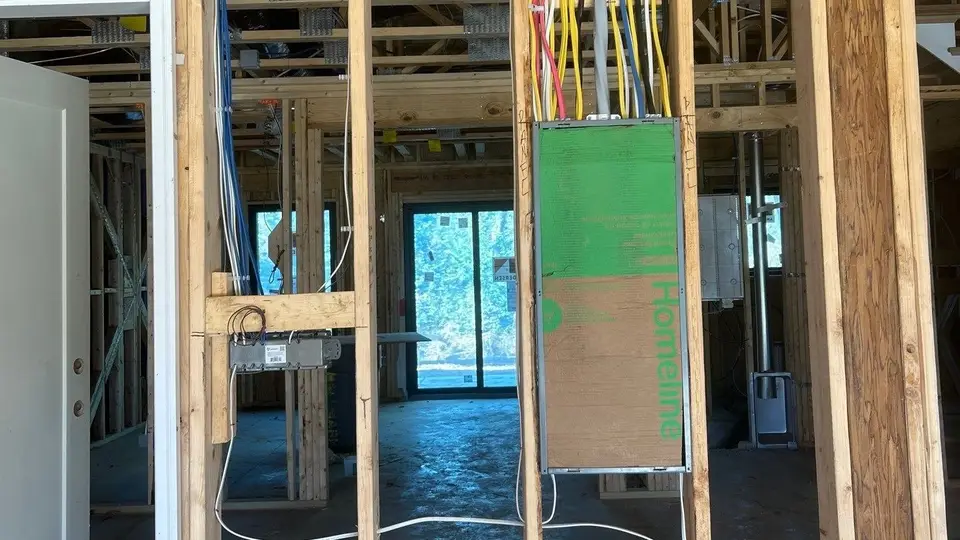
Short answer: Your electrical panel may need an upgrade if breakers trip often, lights dim or flicker when big appliances start, the panel feels warm or smells like burning, you still have a fuse box or very old equipment, or you are adding something big like an EV charger, a hot tub or a new addition. None of these signs prove the panel is the problem on its own, but each one is a good reason to have a licensed electrician take a look.
Your panel takes power from the utility and splits it into the circuits that feed every room. When it is too small or worn out, problems show up in everyday ways. Here is what to watch for and when to call.
7 signs your electrical panel may need an upgrade
1. Breakers trip again and again
A breaker that trips once in a while is doing its job: it shuts off a circuit that is overloaded or has a fault. A breaker that trips every time you run the microwave and the toaster together, or that trips for no clear reason, is different. It can mean a circuit is carrying more than it was designed for, the breaker itself is wearing out, or the panel has no room left to split loads onto new circuits.
2. Lights dim or flicker when appliances turn on
If the lights dip when the air conditioner, dryer or a space heater kicks on, the house may be short on capacity, or there may be a loose connection. Either way, have it checked.
3. The panel is warm, buzzing or smells like burning
A panel should not feel hot, crackle, buzz or give off a burning smell. Scorch marks, melted plastic or rust on or inside the panel cover are also warning signs. If you notice any of these, stop using the affected circuits if you can do so safely, keep away from the panel, and call a licensed electrician. Do not open the panel cover yourself.
4. You still have a fuse box or very old equipment
Many older homes still have fuse boxes or original panels that were never designed for today’s appliances and electronics. Some older panel brands and models are also known to have problems. Age alone does not mean a panel has to go, but an electrician can identify what you have and whether it should be replaced.
5. You are running out of breaker spaces or relying on power strips
If there is no open space in the panel for a new circuit, or you see breakers doubled up in ways the panel was not built for, the panel has reached its limit. Extension cords and power strips running everywhere are a sign the house does not have enough circuits where you need them.
6. You are adding a big new load
Some of the most common reasons homeowners call about a panel are planned projects, not problems:
- A Level 2 EV charger
- A hot tub, pool equipment or a new heat pump
- A kitchen or bathroom remodel with new appliances
- A finished basement, garage workshop or addition
- A whole-house generator
Each of these adds demand. Before the work starts, an electrician should check whether your panel and service can handle the extra load, or whether they need an upgrade first.
7. A home inspection or insurance company flagged it
Home inspectors often note panels that are outdated, damaged, undersized or not labeled. Some insurance companies also ask about older panels. If your inspection report lists panel items, a licensed electrician can review them and tell you which need attention.
What an electrical panel upgrade involves
Every house is different, so the exact scope comes from an on-site look. At a high level, a panel upgrade usually follows these steps:
- Assessment. A licensed electrician looks at the existing panel, the wiring feeding it, and the loads in your home now and planned for the future.
- Plan and written estimate. You get a clear description of what will be replaced and why, and a written price before any work starts.
- Permit. Panel work normally needs a permit from your city or county. Your electrician should pull it.
- Utility coordination, when needed. If the job includes a service upgrade (more capacity coming into the house, not just a new panel), the power company has to disconnect and reconnect service. Our guide on who to call for a service upgrade explains how that works with Rock Hill Utilities, Duke Energy and York Electric Cooperative.
- Installation. The old panel is removed, the new one is installed, and circuits are connected and labeled.
- Inspection and walkthrough. The inspector checks the work, power is restored, and your electrician walks you through the new panel.
What affects the cost of a panel upgrade
There is no single price for a panel upgrade, because the work depends on the house. The main things that affect cost are:
- Panel only or full service upgrade. Replacing a panel at the same capacity is a smaller job than increasing the service coming into the home, which can also involve the meter base and the utility.
- The size of the new panel and how many circuits it needs to hold.
- The condition of what is there now. Damaged wiring, an outdated meter base or code issues found during the work can add to the scope.
- Location and access. Where the panel sits, and whether it needs to be moved, changes the labor involved.
- Permits and inspection requirements in your city or county.
- Add-ons you choose, such as a whole-house surge protector or new circuits for planned projects.
The best way to get a real number is an on-site estimate. At J&E Electric, our estimator comes out, looks at the job and gives you a written price. Nothing starts until you approve it.
When to call a licensed electrician
Call right away, and keep away from the panel, if you notice:
- A burning smell, smoke, scorch marks or melted parts at the panel or an outlet
- A panel that is hot to the touch, or that buzzes or crackles
- Breakers that will not stay reset
Schedule a visit when:
- Breakers trip regularly or lights flicker when appliances run
- You have a fuse box or an older panel and are not sure of its condition
- You are planning an EV charger, hot tub, remodel, addition or generator
- A home inspection or insurer flagged the panel
Panel work is not a DIY job. It involves the parts of your system that stay energized even with the main breaker off, and it needs a permit and inspection. Leave it to a licensed electrician.
Panel upgrades in Rock Hill, Fort Mill and the Charlotte area
J&E Electric has been working in Rock Hill since 2008. We are licensed in South Carolina (M110118) and North Carolina (27147-U), and insured. We handle panel upgrades for homes across York, Chester and Lancaster counties in South Carolina and Mecklenburg and Union counties in North Carolina, including Rock Hill, Fort Mill, Tega Cay and Charlotte. We pull the permit, meet the inspector and walk the job through with you before we leave.
If any of the signs above sound familiar, or you are planning a project that adds load, request an estimate. Tell us what is going on and where, and we will set a time to come and look. You can also call (803) 965-8714, Monday to Friday, 8 am to 5 pm.
Learn more about our electrical panel upgrade service.
Related service: Residential Electrical Services
Tell us about the job
An article is not a quote. Call or send the form and we come look before any work starts.
- Tell us the job and where it is
- We come and look, then you get an estimate
- Nothing starts until you approve it
Rather talk? (803) 965-8714, Mon - Fri: 8:00 am - 5:00 pm.