What a home EV charger installation involves
- Tell us the car and the charger. Send the form or call. Tell us what you drive, which charger you have or want, and where you park. A photo of your panel helps.
- Panel and load check. A Level 2 charger is a large load that can run for hours. We look at your panel and your service to see if they can carry it alongside everything else in the house.
- Written estimate before work starts. You get the scope and a written price: the new circuit, the charger mounting, and any panel work the charger needs. Nothing begins until you approve it.
- We pull the permit. A charger circuit is new wiring, and every city and county around Rock Hill and Charlotte requires an electrical permit for it.
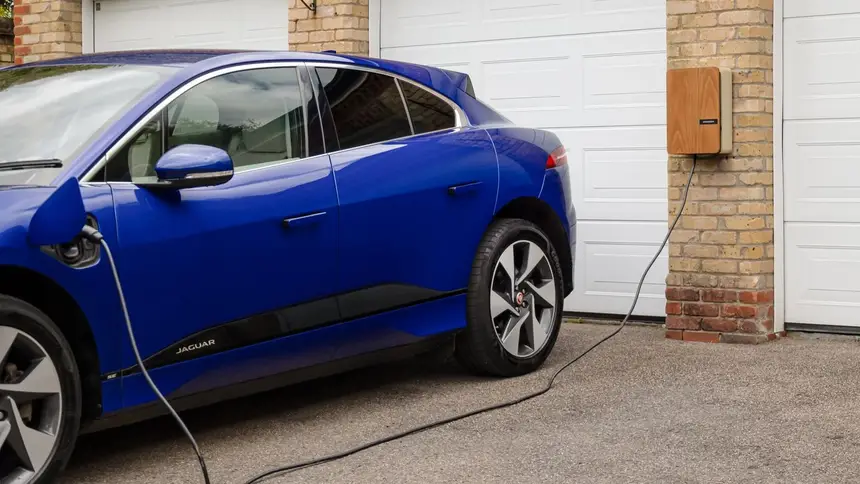
- Installation. Our own licensed electricians run the dedicated circuit from the panel and mount and connect the charger, or install a 240-volt outlet if your charger plugs in.
- Inspection and walkthrough. We meet the inspector, then show you the breaker and how the charger is set up before we leave.
Bought the car, or about to? Request an estimate.
Hardwired or plug-in, Tesla or universal
Most home chargers can be hardwired to the circuit or plugged into a 240-volt outlet. Hardwiring suits a charger that stays on the wall. A plug-in charger can move with you. We install either way and follow what your charger's manual calls for.
Choosing between a Tesla Wall Connector and a universal (J1772) charger? Our guide on the Tesla Wall Connector vs a universal EV charger explains the difference.
What EV charger installation costs
Most home EV charger installs we do run $750 to $1,800. What moves the price inside that range:
- Distance. How far the new circuit runs from the panel to where you park.
- The path. An open garage wall is quicker than a run through finished walls or out to a driveway.
- Hardwired or plug-in, and the size of circuit your charger calls for.
This is a typical range, not a quote. If your panel needs an upgrade first, that goes into the same written estimate, and you see the price before any work starts.
Does my panel need an upgrade for an EV charger?
Sometimes. Many homes have room for a charger circuit. Older or smaller panels, or houses that already run a heat pump, an electric range and a dryer, may not. We do the load check first. If the panel or service cannot carry the charger, the panel upgrade goes into the same estimate. If the service into the house has to grow, the power company is involved too: our guide on who to call for a service upgrade covers Rock Hill Utilities, Duke Energy and York Electric Cooperative.
Permits and rebates
Rock Hill requires a licensed contractor to do electrical work in a home. Fort Mill, Tega Cay, York County and Mecklenburg County allow homeowner permits only under narrow rules, and Tega Cay has its own written permit guide for home EV chargers. Our guide to EV charger permits in Rock Hill, Fort Mill, Tega Cay and Charlotte lists who issues the permit in each place, with a link to each office.
Duke Energy and York Electric Cooperative both list incentives for home charging. Duke's requires an approved permit and an invoice from a licensed electrician. Check the current terms with your utility before you buy. You get the permit and the invoice from us either way.
Where we install EV chargers
Rock Hill is home base, and the same licensed crew works both sides of the state line.
- South Carolina: York, Chester and Lancaster counties, including Rock Hill, Fort Mill, Tega Cay and Lake Wylie.
- North Carolina: Mecklenburg and Union counties, including Charlotte.
Service area pages: Rock Hill electrician · Fort Mill electrician · Tega Cay, SC · Charlotte, NC · All service areas
Licensed in South Carolina (M110118) and North Carolina (27147-U), and insured. You get an estimate before work starts, and we do not begin until you approve it.