Why a transfer switch is not optional
A transfer switch keeps generator power inside your house and off the utility lines. Without one, a generator can send power back onto the lines. That is called backfeeding, and it puts the line crews fixing the outage at risk. Duke Energy advises against connecting a generator directly to a breaker panel, fuse box or meter box, and Mecklenburg County Code Enforcement says the electrical code requires a transfer switch when a generator is connected to a building's wiring. Never plug a generator into a wall outlet.
- Automatic transfer switch. Used with standby generators. It senses the outage, starts the generator, moves the house over, and switches back when utility power returns.
- Manual transfer switch. Common with portable generators. You switch over by hand, and a generator inlet outside the house takes the cord.
- Whole house or chosen circuits. A switch can carry the entire house, or only the circuits you pick: the refrigerator, some lights, the furnace fan, a well or sump pump.
Sources: Duke Energy: generator safety · Mecklenburg County: generator safety
Tired of losing power in storms? Request an estimate.
What a whole-home standby generator costs
Most whole-home standby generator installs we do run $15,999 to $18,999. Three things move the price inside that range:
- Generator size. A unit that runs the whole house, central AC included, costs more than one sized for the essentials.
- The gas line. How far the line runs from your gas meter or propane tank to the generator.
- Your panel. An older or full panel can need work before the transfer switch goes in.
This is a typical range, not a quote. You get a written price for your house before any work starts.
How a generator install with J&E works
- Tell us the generator and the house. Send the form or call. Tell us if you already have a generator or are choosing one, and what you want to keep running. A photo of your panel helps.
- Panel and load check. Generator size depends on what you want to run at the same time, not on the size of the house. We look at the panel and the big loads, such as central AC, a heat pump, a well pump or an electric range.
- Written estimate before work starts. You get the scope and a written price: the generator, the transfer switch, the wiring, the inlet or connection, any panel work and the gas line. Nothing begins until you approve it.
- Permits. Connecting a generator to the house wiring needs an electrical permit and an inspection everywhere we work, and we pull it. If the generator runs on natural gas or propane, the fuel line is gas work with its own permit. We hire a licensed plumber for that part, so you do not have to find one.
- Installation. Our own licensed electricians install the transfer switch and make the connection between the generator and your panel. The plumber runs the gas line.
- Inspection and walkthrough. We meet the inspector, then show you how to switch over and what the generator will run.
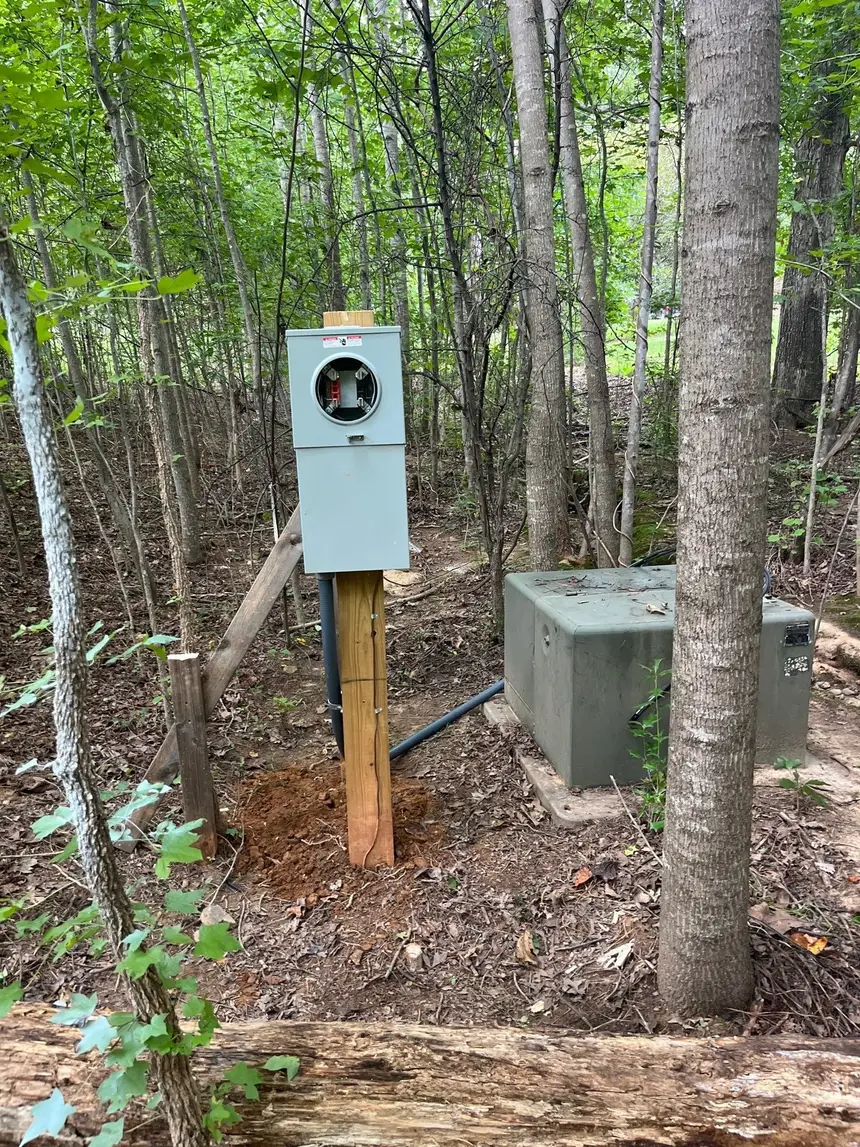
Recent generator work: Generator connection, Lake Wylie, SC. We installed a portable generator connection.
A transfer switch sometimes needs a newer panel or more capacity. Our panel upgrade page and the guide to the signs your home needs a panel upgrade explain when that comes up.
Where we install generator connections
Rock Hill is home base, and the same licensed crew works both sides of the state line.
- South Carolina: York, Chester and Lancaster counties, including Rock Hill, Fort Mill, Tega Cay and Lake Wylie.
- North Carolina: Mecklenburg and Union counties, including Charlotte.
Service area pages: Rock Hill electrician · Fort Mill electrician · Tega Cay, SC · Charlotte, NC · All service areas
Licensed in South Carolina (M110118) and North Carolina (27147-U), and insured. You get an estimate before work starts, and we do not begin until you approve it.