Most hardwired hot tubs need a dedicated circuit from the panel, GFCI protection, a maintenance disconnect within sight of the tub, wiring suited to outdoor and wet locations, and bonding. The spa's spec sheet sets the electrical requirements.

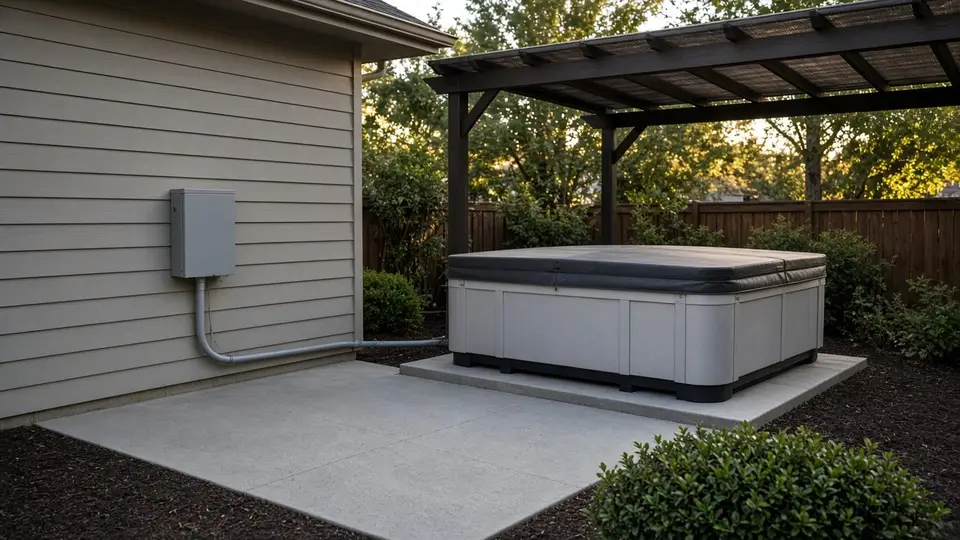
Short answer: Most hot tubs need a dedicated circuit from your electrical panel, GFCI protection, a maintenance disconnect within sight of the tub, and bonding, all installed to the electrical code your town enforces. The wire size and breaker are set by the spa’s spec sheet and sized by a licensed electrician. Hot tub wiring normally needs a permit and inspection, so book the electrician before the spa is delivered, not after.
A hot tub is one of the larger electrical loads you can add to a home, and it sits in water. That combination is why the code treats it carefully. Here is what to plan for.
Most hardwired hot tubs need a dedicated circuit, GFCI protection, a maintenance disconnect within sight of the tub and bonding. Your electrician plans each one to the spa’s spec sheet and local code.
Hot tubs come in two broad types:
For a hardwired spa, the electrician typically plans:
The manufacturer’s installation instructions and spec sheet tell the electrician what the spa requires. Get them from the dealer as soon as you pick a model.
The spa’s spec sheet sets the circuit size, and code requires a maintenance disconnect within sight of the spa and set back from the water.
Wire size and breaker. One of the most common questions is “6/2 or 6/3 wire?” The honest answer is that it depends on the spa. The required circuit size is set by the spa’s spec sheet and sized by a licensed electrician, who also accounts for the distance from the panel and the wiring method. Guessing at wire size is one of the easiest ways to get a hot tub installation wrong.
Maintenance disconnect. Outdoor spas and hot tubs need a maintenance disconnect for the equipment. It has to be easy to reach, within sight of the spa and set back from the water’s edge by the distance code requires. The disconnect lets the spa be shut off safely for service.
Electrical code requirements change over time, and the version that applies is the one your state and town have adopted. Your electrician and the inspector work from that version.
Yes. Code requires GFCI protection for the outlets and circuits that supply spas and hot tubs.
GFCI stands for ground-fault circuit interrupter. A GFCI cuts power when it detects current leaking where it should not, for example through water. Many hot tubs get that protection from a GFCI breaker or from a GFCI in the disconnect.
Test the hot tub’s GFCI regularly according to the manufacturer’s instructions. If the test does not trip it, call a qualified electrician. Our guide to GFCI vs GFI vs AFCI explains how these devices differ. For related outlet issues, see outlet and GFCI problems in York County homes.
Normally, yes. Hot tub wiring usually needs an electrical permit and inspection from the city or county where the house is.
The inspector checks the circuit, GFCI protection, disconnect, wiring method and bonding before the spa is put into use.
At J&E Electric, we pull the permit in whichever jurisdiction the job falls in, so you do not have to sort that out yourself.
Sources: North Carolina Office of State Fire Marshal: State Electrical Code and Interpretations
A hot tub adds a large, long-running load, especially while the heater is running in winter. Before you buy, have an electrician confirm that your panel has the capacity and the space for a new breaker. Older panels, full panels and homes that already run several large appliances may need a panel upgrade first. Our guide to the signs your panel needs an upgrade covers what to look for.
Where the tub sits affects the wiring. At a high level, code covers:
Choose the location with your dealer and electrician together. The spot that looks best on the patio may not be the easiest or safest place to bring power.
Before delivery: get the spec sheet, then book the electrician so the circuit and inspection are done when the spa arrives.
The most common hot tub wiring mistake is planning the electrical last. A smoother order looks like this:
Booking early means the circuit is ready when the spa arrives, instead of a full tub sitting unpowered while you wait.
This is not DIY work. Hot tub wiring combines high current, water and code requirements that an inspector will check. Leave it to a licensed electrician.
Hot tub, jacuzzi and swimming pool wiring, including bonding and GFCI protection, is part of our Specialty Electrical Services. We work across York, Chester and Lancaster counties in South Carolina and Mecklenburg and Union counties in North Carolina, from Rock Hill and Fort Mill through to Charlotte. We are licensed in South Carolina (M110118) and North Carolina (27147-U), and insured. If the new spa adds more load than your panel can carry, ask about a panel upgrade at the same time.
You get an estimate before work starts, and we do not begin until you approve it. If you are planning a hot tub, request an estimate. Tell us the spa model and where it is going, and we will set a time to come and look. You can also call (803) 965-8714, Monday to Friday, 8 am to 5 pm.
Request an estimate · Related service: Specialty Electrical Services
An article is not a quote. Call or send the form and we come look before any work starts.
Rather talk? (803) 965-8714, Mon - Fri: 8:00 am - 5:00 pm.
J&E Electric
We call or text you back, Mon to Fri 8am to 5pm